


DS - DUODENAL SWITCH GASTRIC BYPASS
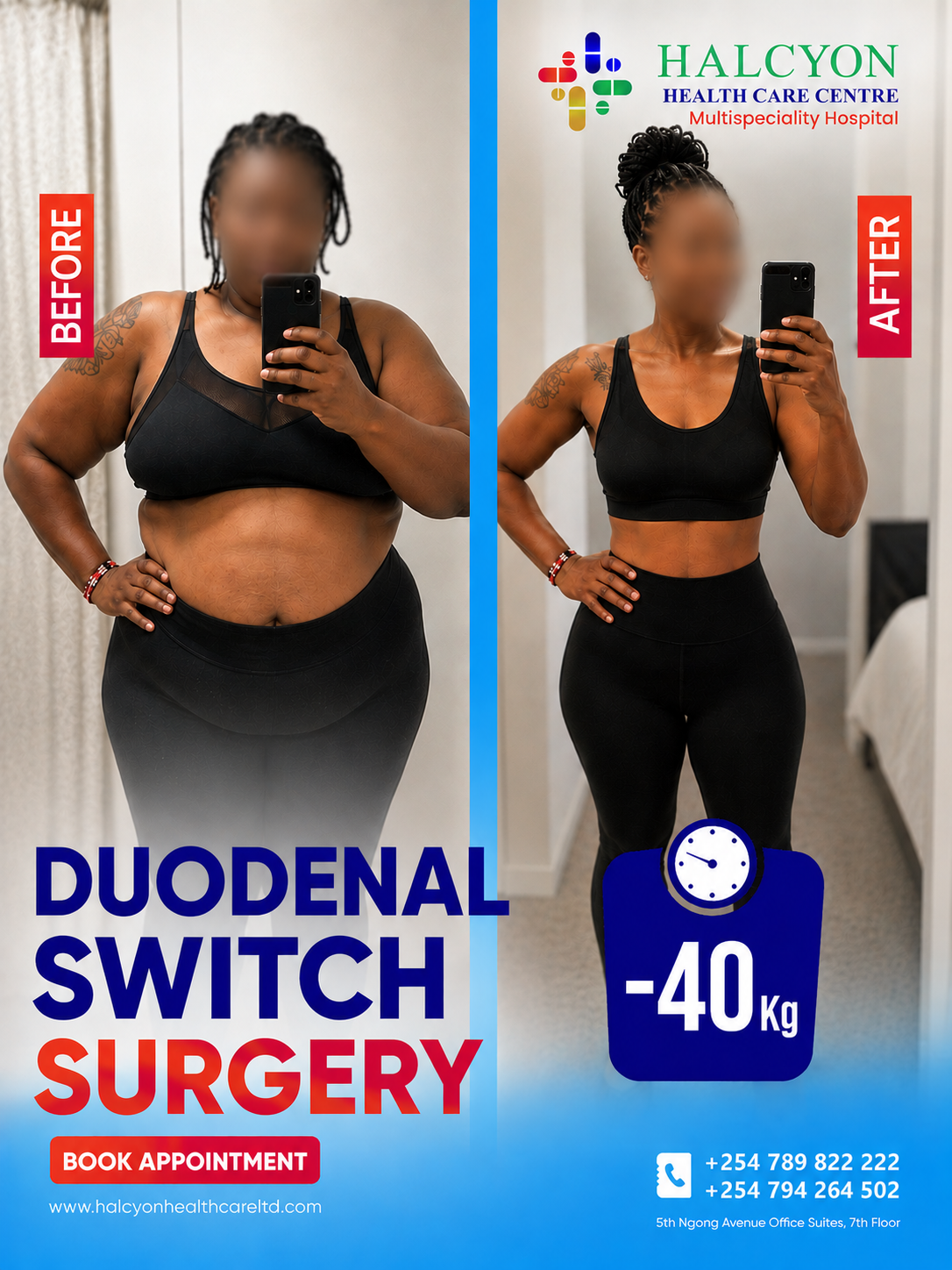
Lose 70-90% of excess body weight with Duodenal Switch Surgery Kenya
Duodenal Switch Surgery Kenya is a weight loss procedure that makes the stomach smaller and reroutes part of the intestine, helping patients eat less, absorb fewer calories, and lose a large amount of excess weight.
- For BMI’s above 60
- 2-3Hrs Procedure
- Laparoscopic, Less Invasive
- 3-5 Days Hospital stay

Lose 70–90% of their excess body weight (EBW) within 18–24 months after surgery and achieve lasting weight loss..
Who is considered as an eligible candidate for Duodenal Switch Surgery Kenya
- BMI of 40 or higher
- BMI of 35 or higher with obesity-related conditions (e.g., diabetes, sleep apnea, high blood pressure)
- Individuals with a BMI over 50 seeking significant weight loss
- Those who have not achieved lasting weight loss through diet, exercise, or medication
- Patients committed to lifelong vitamin supplementation and follow-up care
Advantages
- Faster and more sustained long-term weight loss
- Lower risk of weight regain
- High rates of improvement or remission of obesity-related conditions
- Improved quality of life and eating satisfaction
- Allows near-normal portion sizes over time
Disadvantages
- Higher risk of vitamin and mineral deficiencies
- Requires lifelong vitamin supplementation and follow-up
- Success depends on adherence to diet and exercise
- Increased risk of acid reflux
- More complex procedure than some other bariatric surgeries
Main Complications
- Bleeding (< 1%)
- Infection (< 1%)
- Leakage from staple line or surgical connections (< 1%)
- Development of strictures (narrowing of the stomach or intestine) (1–3%)
- Vitamin and mineral deficiencies (long-term risk requiring lifelong supplementation)
Main Side Effects
only first few days after the procedure- Frequent bowel movements (common, especially during the first 6–12 months)
- Diarrhea or loose stools (10–30%)
- Increased gas and bloating (common)
- Strong-smelling stools or gas (common)
What is Duodenal Switch
DS is particularly effective for morbid obesity, offering superior long-term weight loss compared to other conventional methods. It also has a notable advantage in improving or resolving obesity-related comorbidities such as diabetes.
Duodenal Switch - How does it Work?

An advanced bariatric procedure performed under general anaesthesia, typically completed within 2-3 hours. through laparoscopic techniques.
A portion of the stomach is surgically removed, leaving a smaller, tubular stomach pouch. This reduction limits the amount of food that can be consumed at one time, contributing to weight loss by enforcing a lower calorie intake
Usually for BMIs over 60, with up to 80% excess weight reduction
A
Pre Procedure
Laparoscopic duodenal switch is recommended for individuals who meet certain criteria. These may include:
- Body Mass Index (BMI) of 60 or higher, indicating Morbidly obesity (class III)
- BMI of 40 or higher, accompanied by obesity-related health conditions such as diabetes, high
blood pressure, sleep apnea, heart disease, cholesterol etc. - Previous unsuccessful attempts at weight loss through diet, exercise, and other non-surgical
methods - Past medical and surgical history may also affect eligibility, so it is important to come in for a consult beforehand.
MEDICAL – Obesity-related illnesses such as heart disease, stroke, type 2 diabetes, cholesterol,
infertility, sleep apneas, asthma and cancer; are reduced. It also helps in long-term control of
type 2 diabetes, and less dependence on medication — or the elimination of medication
altogether.
PHYSIOLOGICAL – You may also enjoy the elimination of back and joint pain, decreased
depression, improved breathing and increased energy.
PSYCHOLOGICAL – Dramatic improvements in your overall health and quality of life with
improved self-image, increased self-confidence and the satisfaction that comes from enjoying a
wider range of activities with friends and loved ones.
Results may vary dependent on lifestyle changes as well, we recommend an amalgamated
approach for best results and sustainability.
WEEKS BEFORE
- To determine the suitability & your body’s fitness for the surgery we will take you thorough medical, psychological, nutritional assessments and pre- counselling.
- The pre-surgery weight loss diet is essential because it is low in fat and carbohydrate content,helping reduce your glycogen levels and reduce your liver size so that the operation can be conducted.
- There should be no intake of caffeinated drinks (coffee and energy drinks) at least a week before your surgery date.
- Your dietary intake in the week leading up to the surgery should be light like vegetables and fruits.
- You’ll need to stop smoking, eating heavy unhealthy meals, stop taking aspirin, ibuprofen, and other blood-thinning medicines in the days before your surgery.
- You shouldn’t eat or drink anything after midnight before surgery.
B
How Is It Done & How Does It Work

For this, a large portion of the stomach is removed with a surgical stapling, leaving you a narrow tube, or sleeve, from the top to near the bottom of the stomach. With less stomach to fill, you will feel full more quickly and eat less food and fewer calories.
The surgeon will make a cut in between the stomach exit and the duodenum and connect the stomach to a lower part of the intestines.
The remnant duodenum will then be rerouted and connected further down also to the intestines.
As a result, food will travel down the 1st tube stomach-intestine path, and the digestive juices
from the liver/pancreas will travel down the 2 nd remnant duodenal-intestine path.
The food and digestive juices will meet up again approximately 75% further down the intestinal pathway where the 2 parts conjoin.
This results in significant reduced food absorption and hence fewer calories
Between the stomach, pancreas, brain, and liver, it assists in establishing a lower and healthier body fat.
It causes changes in the normal way that bile and digestive juices break down food. This cuts back on how many calories you absorb, causing still more weight loss.
C
Procedure
Recovery may vary from person to person, but here’s what you need to know: Hospital Stay: 3-5 days after the surgery to ensure proper healing, rehabilitation and monitoring of progress. Patients who have undergone laparoscopic procedures may return to work within 1 week after surgery. However, it is not advisable to engage in intense physical work
Shortly after surgery, you’ll begin reintroducing foods into your diet in phases in consult with your nutritionist who will teach you how and what to eat with your reduced stomach size. You’ll start consuming a clear liquid diet within 24 hours of your surgery, then advance to a full liquid diet, a soft food diet, and your regular diet in the weeks ahead. You will also have to reduce certain foods, such as simple sugars, including honey, white sugar, or syrups, to avoid dumping syndrome. You will be need to chew slowly and fully, and not to drink 30 minutes before or after you eat. While it may seem demanding, ignoring dietary recommendations may cause constipation, dehydration, diarrhea, or in extreme very rare cases, gastric acid leakage.
You will have follow-up visits with your bariatric surgery team to help you develop good eating and exercise habits that will change your lifestyle. Your initial weight-loss may occur quickly, so it’s important to get all of the nutrition and vitamins you need as you recover. To prevent nutritional problems after surgery, your doctor may advise on supplements like Vitamin B12 and iron.
Tell your doctor right away if you have any of the below:
- Fever
- Your wound becomes painful or hot to the touch or leaks fluid
- Coughing or trouble breathing
- Vomiting and diarrhea
- Pain in the abdomen, chest, shoulder, or legs
- Any other problems or symptoms
During weight-loss, you may have body aches, dry skin, mood changes, and temporary hair
thinning, and feel tired and cold among others. As your weight stabilizes, these problems should
go away. Weight loss continues for about a year, and then it will stabilize at your body’s
optimum BMI. It is important to incorporate lifestyle modification for sustainability and lifelong
results.






















FAQs
Duodenal Switch is a weight loss surgery that reduces the size of the stomach and limits calorie absorption to help patients lose significant weight.
Most patients lose 70%–90% of their excess body weight within 18–24 months after surgery.
It is typically recommended for people with severe obesity (BMI 40+) or those with obesity-related conditions such as diabetes or sleep apnea.
It helps you eat less, feel full sooner, and absorb fewer calories from food.
The procedure usually takes 2–4 hours.
Most patients stay in the hospital for 2–4 days after surgery.
Yes. Most Duodenal Switch surgeries are performed laparoscopically through small incisions.
Most patients return to normal activities within 2–4 weeks.
Yes. You will follow a staged diet plan and adopt healthier eating habits long-term.
Yes. Lifelong vitamin and mineral supplements are necessary to prevent nutritional deficiencies.
Yes. Many patients experience significant improvement or remission of Type 2 diabetes.
Potential risks include infection, bleeding, blood clots, leaks, and nutritional deficiencies.
Weight regain is possible, but Duodenal Switch has one of the lowest rates of regain among bariatric procedures.
Yes, but it is generally recommended to wait 12–18 months after surgery before becoming pregnant.
Yes. It is considered a permanent weight loss procedure.
Duodenal Switch typically results in greater weight loss but requires closer nutritional monitoring.
Most patients begin losing weight immediately after surgery.
Avoid sugary foods, fried foods, carbonated drinks, and highly processed foods.
Coverage varies by insurance provider and policy.
It offers some of the highest long-term weight loss results and can significantly improve obesity-related health conditions.